ADX: the indicator that tells you whether to trade at all
ADX measures trend strength (not direction). Use it to choose between trend-following and mean-reversion setups.
~24 min read
Average Directional Index (ADX) is the single most underrated swing-trading indicator. It doesn't tell you to buy or sell. It tells you whether the market is trending strongly enough that breakout-style setups make sense — or whether you're in chop where breakouts fail at high rates. Used as a filter rather than a signal, it can dramatically improve any trend-following system.
Reading ADX values
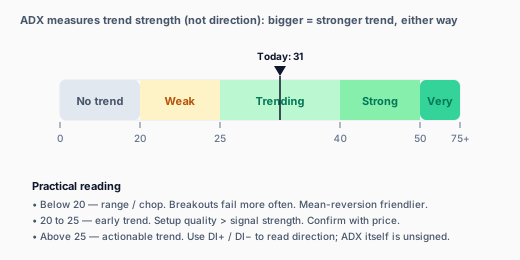
- Below 20 — no trend. Breakouts fail more often than they continue. Mean-reversion and range trades work better here.
- 20 to 25 — early or weak trend. Quality of setup matters more than indicator signal. Look for confirmation in price structure.
- 25 to 40 — actionable trend. Trend-following setups have a tailwind. Most breakouts that follow through happen in this zone.
- Above 40 — strong trend. Pullbacks tend to be shallow and brief. Adding to winners works; counter-trend trades fail badly.
- Above 50-60 — exhaustion zone. Extreme readings often precede consolidation, not reversal — but reduce new entry aggression.
ADX direction matters more than absolute level
ADX 28 rising from 22 is bullish for trend continuation; ADX 28 falling from 35 means the trend is losing strength even if the absolute reading still looks fine. Slope reveals whether buyers are still pressing or starting to step back.
DI+ and DI− — the direction component
ADX itself is unsigned. To get direction, you read the two directional indicators: DI+ (positive directional indicator) and DI− (negative). When DI+ is above DI− and rising, buyers are dominant. When DI− is above DI+ and rising, sellers are dominant. The DI crosses are sometimes used as entries — but they're better used as confirmation of price structure, not as standalone signals.
Practical ADX rules for swing
- Filter your breakout watchlist by ADX > 20. Breakouts in flat markets fail at much higher rates.
- Skip new long entries when ADX > 50 and price is far from structural support — exhaustion risk is high.
- Use ADX on the index (Nifty) to decide overall aggression: low Nifty ADX = chop regime, smaller size or no new trades.
- ADX is calculation-heavy and lags. Use it as confirmation, not as a leading signal.
How Swing Edge uses ADX
Our scanners apply an ADX filter at the index level and at the individual stock level. Pre-breakout setups in stocks with rising ADX above 20 get a quality boost; setups in chop (ADX below 18 with no slope) get downgraded. The Nifty options strategy uses ADX as the primary regime filter — directional bets only trade when ADX confirms a real trend is in place.
Common ADX mistakes
- Confusing ADX with a directional signal — it's strength-only. Always pair with DI or price structure.
- Using ADX on a single low-volume stock without verifying liquidity — math can break down on thin tickers.
- Ignoring the index ADX when trading individual stocks — strong individual setups often fail in index chop.
- Tuning ADX period away from default 14 to make it fit historical data — that's curve-fitting.