
Where to initiate
Breakouts and orderly pullbacks are two common swing entry templates.
~34 min read
A pivot zone is shorthand for an area where supply and demand have balanced long enough that a resolution matters to the swing structure. Buyers stepping up through that zone often imply a willingness to hold higher auctions; rejection back inside can mean the breakout failed. Your job is to define observable evidence, not narrative alone.
Two classic swing entries bookend continuation: breakout participation (buying the transition as it proves) and pullback participation (buying the first or second orderly dip after proof). Each has different psychological cost: breakouts feel late; pullbacks feel clever until they keep falling.
Breakout participation
- Look for expansion in range and volume versus the base average—quiet bases that suddenly expand can signal initiative.
- Prefer closes through the level, not only intraday spikes that fade (venue and stock liquidity matter).
- Consider waiting for a day-two hold or a successful retest if one-day wonders are common in that name.
- Your stop often lives back inside the base or below the breakout day’s low—define it before entry.
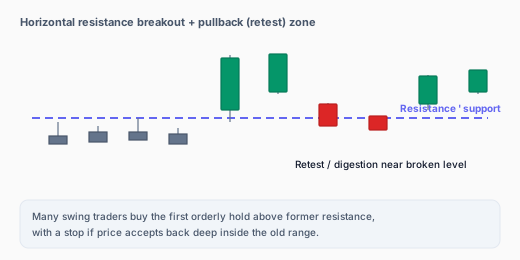
Pullback and retest
After a strong leg up, price often digests gains. A shallow, time-based pullback that holds above the breakout shelf or prior pivot can offer a tighter stop than the initial thrust. The failure mode is buying the first red day in a distribution top—structure still matters.
- Rising lows within the pullback are constructive; cascading highs and lows suggest reversal not digestion.
- Volume ideally contracts into the pullback and expands again on continuation—classic “dry up / expand” heuristic.
- If the pullback violates the corrective low your plan defined, reassess rather than doubling down blindly.
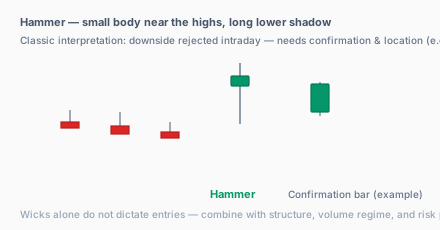
Compression, VCP-ish behavior, and scanners
Volatility contractions and tightening ranges imply stored energy—they do not imply direction alone. Combine compression with broader trend context (index, RS) so you favor long setups in long-friendly tape. Screens that flag VCP-like behavior are filters; verify each chart for liquidity, floats, and obvious overhead supply.
Common pitfalls at the entry lane
- Chasing extended candles far from structure without a fresh invalidation anchor.
- Ignoring spread and impact costs in thin names—you may be mathematically stopped out by friction alone.
- Entering on headlines without a chart level—you cannot size risk properly without a structural stop.
- Overconfidence after a streak of wins—process quality, not recent luck, should size the next trade.