
Choose setups that match the market regime
The same chart pattern behaves differently in a trending market, chop, or risk-off tape.
~37 min read
A stock setup is never isolated. Swing traders operate inside a market regime: index trend, sector leadership, volatility, liquidity, and breadth. A breakout that works easily in a broad rally may fail repeatedly in a range-bound or risk-off market. Regime awareness is how you decide when to press, when to reduce, and when to wait.
Relative strength is not the same as being green today
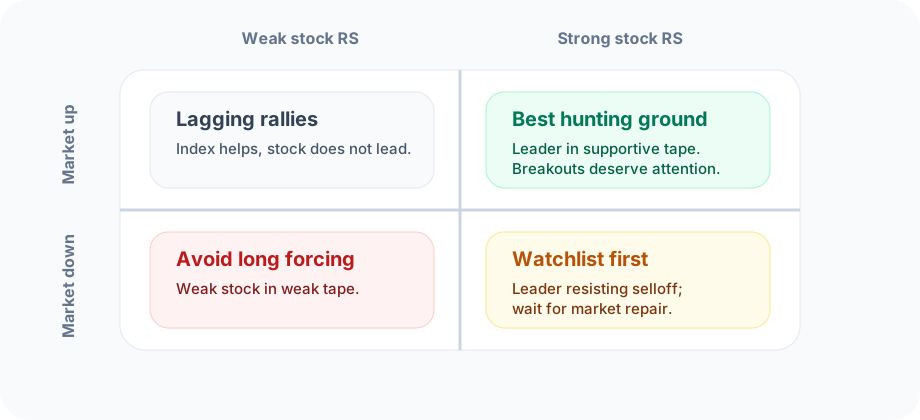
A stock can be up 2% today and still be weak if the sector is up 6%. Relative strength asks whether the name is leading its benchmark over a useful window and whether it resists damage on broad down days. Leaders often show themselves before the index looks perfect.
- Strong RS during market weakness can build a watchlist for the next market repair.
- Weak RS during a broad rally suggests the stock is lagging despite a favorable tide.
- Sector leadership matters: many breakouts cluster when institutions rotate into a group.
- Do not buy RS blindly; price structure and risk still control the trade.
Three common regimes
Trending markets reward continuation. Choppy markets punish obvious breakouts and favor smaller size, quicker profit-taking, or waiting for retests. Risk-off markets can make even strong charts gap lower; in those periods, standing aside is an active decision, not laziness.
Breadth and participation
Breadth asks how many stocks are participating. If the index is up because only a few heavyweights carry it, smallcap and midcap breakouts may behave poorly. If many sectors participate, follow-through improves because liquidity is broad rather than narrow.
Practical regime checklist
- Is the index above or below key moving averages and recent swing lows?
- Are sector leaders breaking out, holding, or failing together?
- Are breakouts following through for two to five sessions, or reversing the next day?
- Is your watchlist producing more high-quality setups or only forced marginal names?
- Should your default size be normal, reduced, or zero until conditions improve?