
ATR-based stops: let volatility decide your size
Stop distance should reflect the stock's actual volatility — not a fixed percentage. ATR is the cleanest way to do this.
~28 min read
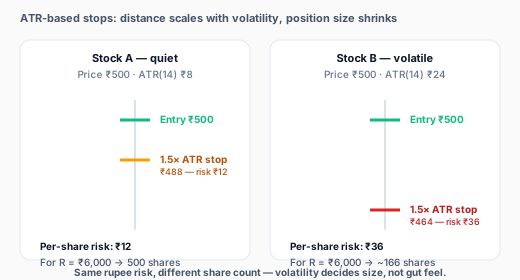
Average True Range (ATR) measures average daily range over a lookback (default 14). It's expressed in rupees, not percent. ATR of ₹8 means the stock moves ₹8 in a typical day, including gap. ATR of ₹24 means it moves three times as much. If you give both stocks the same stop distance, you're treating them as equally volatile when they're not — and your stops will get hit on the volatile name from normal noise alone.
The ATR multiplier choice
- 1× ATR — very tight. Suitable only for momentum entries with clear invalidation right under the entry bar.
- 1.5× to 2× ATR — most common swing-trader range. Wide enough to absorb normal noise, tight enough to size meaningfully.
- 2.5× to 3× ATR — wide. Used in position trades or volatile names. Forces smaller share count but stays out of normal whipsaw.
- Don't fix the multiplier in stone. Different stocks, regimes, and timeframes deserve different choices.
ATR for position sizing
The most powerful use of ATR isn't where to put your stop — it's how it forces correct position sizing. Once you commit to "my stop is 1.5× ATR below entry" and "I will risk ₹R per trade," your share count is determined. Volatile stocks automatically get smaller positions; quiet stocks get larger. This single rule eliminates a huge category of position-sizing errors.
Chandelier stops — ATR trail in motion
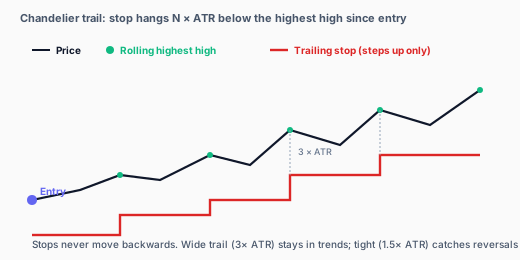
A chandelier stop is a trailing stop calculated as: highest high since entry minus N × ATR. It steps up as new highs are made, but never moves down. Common defaults are 3× ATR for swing trades and 2× ATR for shorter holds. The chandelier gives you a volatility-adjusted trail that automatically loosens in volatile names and tightens in quiet ones.
ATR for target setting
Some traders set targets in ATR multiples — e.g., "first target at 2× ATR, second at 4× ATR." This is mechanical, simple, and avoids hindsight target-setting. It also has the virtue of treating volatile and quiet stocks symmetrically. The drawback: it ignores structural targets (prior highs, measured moves). A hybrid — "target the lower of 3× ATR or the prior swing high" — tends to work better.
ATR period and timeframe choices
- Daily ATR(14) is the standard for swing trades. Suitable for most positions held days to weeks.
- Weekly ATR(14) is useful for position-sized stops in longer holds — captures multi-day swings naturally.
- Shorter ATR (5 or 7) reacts faster to volatility regime changes — good for active management, risky for fixed stops.
- Don't optimize ATR period to fit one stock — that's curve-fitting. Pick a default and stay consistent.
ATR pitfalls
- ATR is rupee-based, not percentage. Always express stops in rupees to avoid confusion, especially when comparing across stocks.
- After a gap, ATR jumps — your stop suddenly becomes far. Refresh sizing if you reload positions after gap events.
- Very illiquid stocks have artificially low ATR (no trades = no range). Don't size up on micro-caps just because ATR is small.
- ATR doesn't predict direction. It only measures how far price typically moves — your edge has to come from somewhere else.