
Turn scanner results into a repeatable workflow
A scanner should create candidates, not automatic trades.
~40 min read
The biggest mistake with scanners is treating them as instructions. A scanner compresses a large universe into a manageable watchlist. The edge comes from what you do next: validate the chart, reject weak candidates, plan risk, and journal the outcome so the workflow improves.
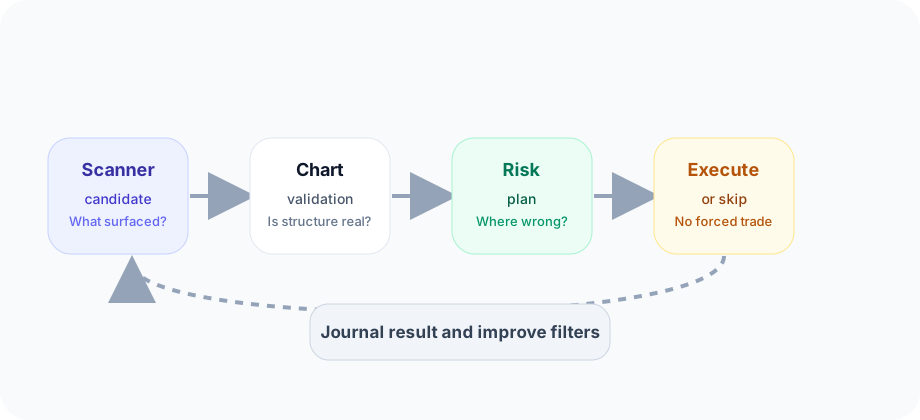
Step 1: classify the scanner signal
Pre-breakout candidates are usually about compression, base quality, and readiness. Breakout candidates are about follow-through and whether the move is still early enough to trade. Bearish candidates are warnings or short-side education, depending on your permitted strategy and risk rules.
Step 2: chart validation
- Is the pattern obvious enough that other participants may see it too?
- Is price near a logical entry zone, or already extended away from risk?
- Is there overhead supply from prior trapped buyers?
- Does volume behavior match the scanner story?
- Does the sector and index context support this direction?
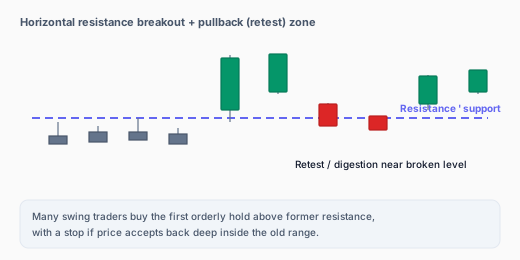
Step 3: reject more than you accept
Professional-style screening is mostly rejection. If 50 names appear, your job is not to trade 50 names. Your job is to identify the handful with clean structure, liquid execution, acceptable event risk, and a stop that makes sense.
- Reject if spread and liquidity make stop execution unrealistic.
- Reject if the best entry already passed and the stock is extended.
- Reject if the setup conflicts with market regime or event risk.
- Reject if you cannot explain invalidation in one sentence.
Step 4: use Scanner Wins as review, not ego
Scanner Wins can build trust in the process because it shows stocks that were identified before movement. It should also teach humility: not every identified stock is tradeable, and not every move was easy to hold. Use wins to study what worked, then compare against skipped names and failed setups.
A simple daily workflow
- After close: review scanner results and shortlist 5-15 names.
- Before next session: mark entry zones, invalidation, event risks, and position-size constraints.
- During session: only act when the planned trigger appears; otherwise observe.
- After exit or invalidation: journal whether the scanner signal was useful and whether your execution followed plan.